
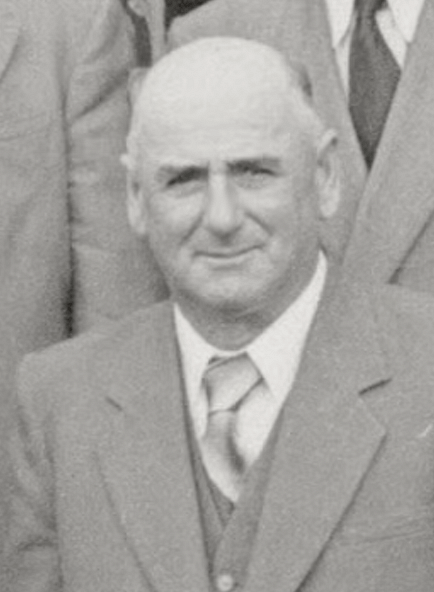
Electrician, Mayor and Community Leader
A. (Bert) E. Wrigley was educated at Seddon Memorial Technical College in Auckland and served overseas in the First World War. His military file can be read here. Over four decades he became one of the most involved figures in Matamata’s civic life.
Timeline
1921: Arrived in Matamata to join the Thames Valley Power Board.
1922: Joined the Matamata Chamber of Commerce, where he was later vice-president.
1923: Elected a member of the Institute of Electrical Engineers.
1927: Started his own business as a registered electrician and electrical contractor.
1930: Rover Leader for the Matamata Scouts.
1933–35: Member of the Matamata Town Board. He worked on developing the Domain, extending the water mains, laying concrete footpaths, planting trees and metalling the sand roads.
1935–41: Borough councillor and deputy-Mayor.
1936: Chairman of the Unemployment Committee, and government representative on the Physical Welfare and Recreation Committee.
1942–47: Mayor of Matamata. He also chaired the Domain Board and the Cemetery Committee.
1956: A deputation of businessmen and ratepayers came to his home and asked him to stand for Mayor again. He agreed to run against deputy-Mayor K. N. Gouk at the 17 November election, saying he had always had Matamata’s progress at heart. Ken Gouk was the successful candidate.
1968: Bert Wrigley died. He is buried in the Matamata Cemetery.
Standing for Mayor in the 1940s
A deputation of ratepayers led by Cr G. H. Hawes asked Wrigley to succeed the ailing Mayor W. A. Gordon. He had first declined because he was worried about new electrical wiring regulations. Once those were withdrawn, he agreed to stand. One supporter joked that, unlike some reformers, Wrigley would not “throw out the baby with the bath water.”
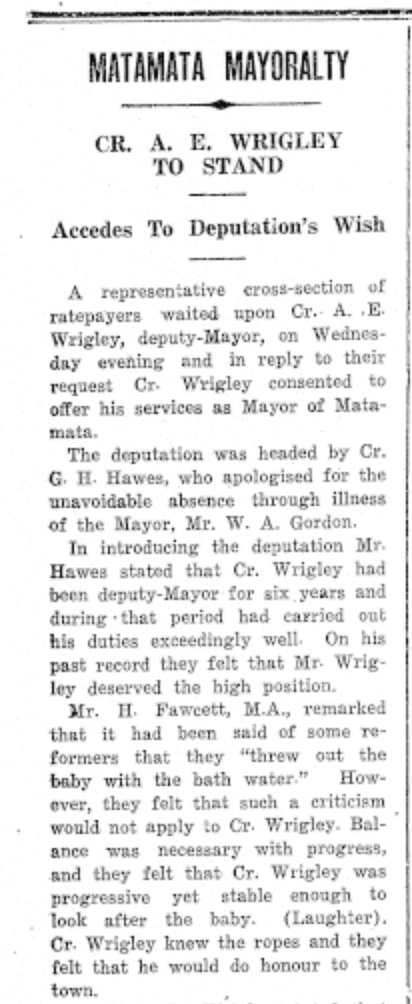
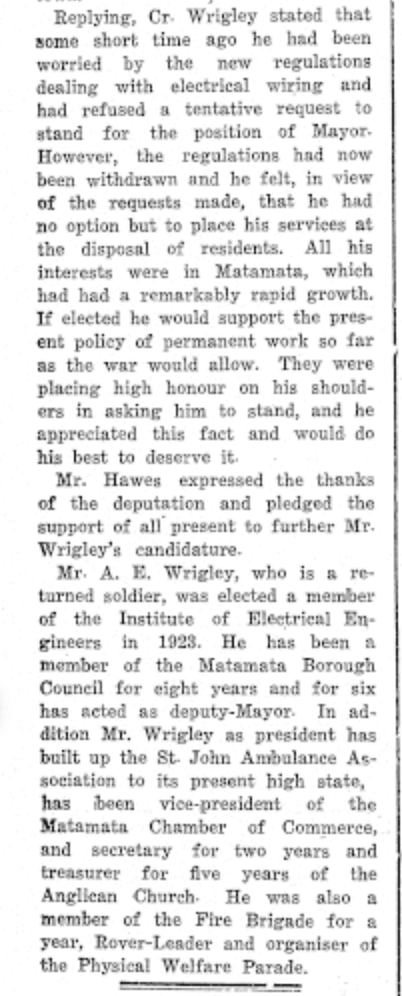
Matamata Record, Volume XXI, Issue 2232, 28 April 1941, Page 5
Service in World War 2
Patriotic and civil defence: Chief Warden of the Emergency Precautions Scheme and chairman of the Inter-Zone Patriotic Committee.
First aid: Chairman of St John Ambulance, which he built up to full strength, and of the joint council of the Red Cross and St John. He was also a sergeant in the Home Guard first aid section.
Home-front committees: He chaired the Servicemen’s Farewell, National Savings, “Awake New Zealand” (an organisation whose role was to rouse natinal spirit), and Food Parcels committees.
After the war: He chaired the Rehabilitation Committee and was the first chairman of the War Memorial Committee.
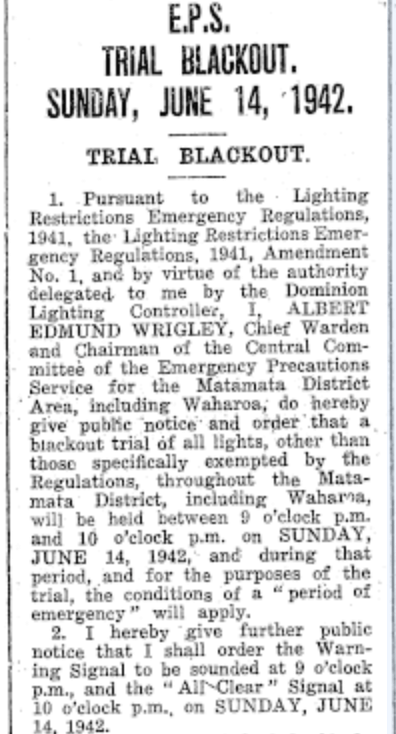
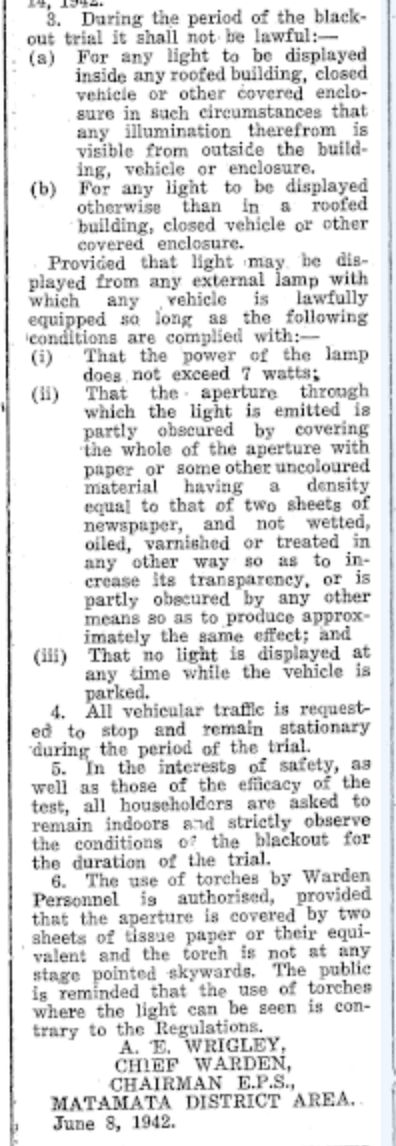
Matamata Record, Volume XXIV, Issue 2344, 8 June 1942, Page 5
Community life
Church and service: Treasurer of All Saints’ Anglican Church, foreman of the Volunteer Fire Brigade and later chairman of the Fire Council, and a founding member of the Orphans’ Club.
Culture and youth: He chaired the Library Committee for more than six years and was vice-president of the Dramatic Society. He was also convenor for the Air Training Corps and chairman of the Boy Scouts’ district committee.
Sport: He was secretary of the Piako Hockey Association, chairman of the Matamata Hockey Club and president of the Women’s Cricket Club. He was also a member of the Racing Club, the RSA, the Matamata and Rewa bowling clubs, and the Matamata Club.
Regional roles: He represented Matamata on the Thames Valley Power Board, sat on the Piako Licensing Committee and chaired the Turanga-o-moana Rabbit Board.
His wife, Mrs Wrigley, was equally active in many patriotic groups.